The Autumn Dip — Why the Season Change Wears You Down, and How to Build a Rhythm That Helps
Shorter days, colder air, and a nose that stops defending itself: what the research actually says about the autumn dip — and where scent rituals honestly fit, without the immunity claims.
Every year it arrives on schedule. The first properly cold week, the light thins, the heating comes on — and half the office starts sniffing. It feels like bad luck. It isn't. The season change genuinely does tilt the field against you, and the reasons are better understood now than they were even a few years ago.
This piece looks at what actually happens to your defences when autumn sets in, what aromatherapy honestly can and cannot do about it, and how to put together a scent routine that earns its place: safe, calm, and consistent enough to matter.
Why autumn actually hits harder
The most striking finding is recent. In 2022, researchers at Mass Eye and Ear and Northeastern University described a front-line defence that lives in the nose: when viruses land, nasal cells release billions of tiny decoy sacs — extracellular vesicles — that bind and neutralise invaders before they reach your cells.
Then the team measured what cold does to that response. When the inside of the nose cooled by about five degrees — fifteen minutes outside on a cold day is enough — the decoy response dropped by nearly half, and the antiviral proteins it carries weakened too. Cold air quite literally disarms the nose first.
And cold air is only one of autumn's levers. Days shorten, so most of us make less vitamin D and keep less regular sleep. Life moves indoors, where shared air gives viruses an easier commute. Central heating dries the air, and dry nasal passages clear invaders less efficiently than moist ones. Add the low-grade stress of the return-to-everything season — school runs, deadlines, dark mornings — and the pattern stops being mysterious. It is several small disadvantages arriving at once.
The scarf is not folklore. Keeping your nose and face warm in cold wind protects the very defence that study measured. A scarf pulled over the nose is about as evidence-aligned as winter advice gets.
What aromatherapy honestly offers here
Let's be precise, because this corner of the internet rarely is. Essential oils do not prevent colds or flu, and no blend "boosts the immune system" in a clinical sense — anyone promising that is selling something.
What the research does support is quieter and more useful: certain oils, with lavender the best-studied, can support relaxation and sleep quality, and scent rituals reliably lower perceived stress. Sleep and stress happen to be two of the levers most closely tied to how well you weather a season change. That is the honest chain — not scent to immunity, but scent to rest to resilience.
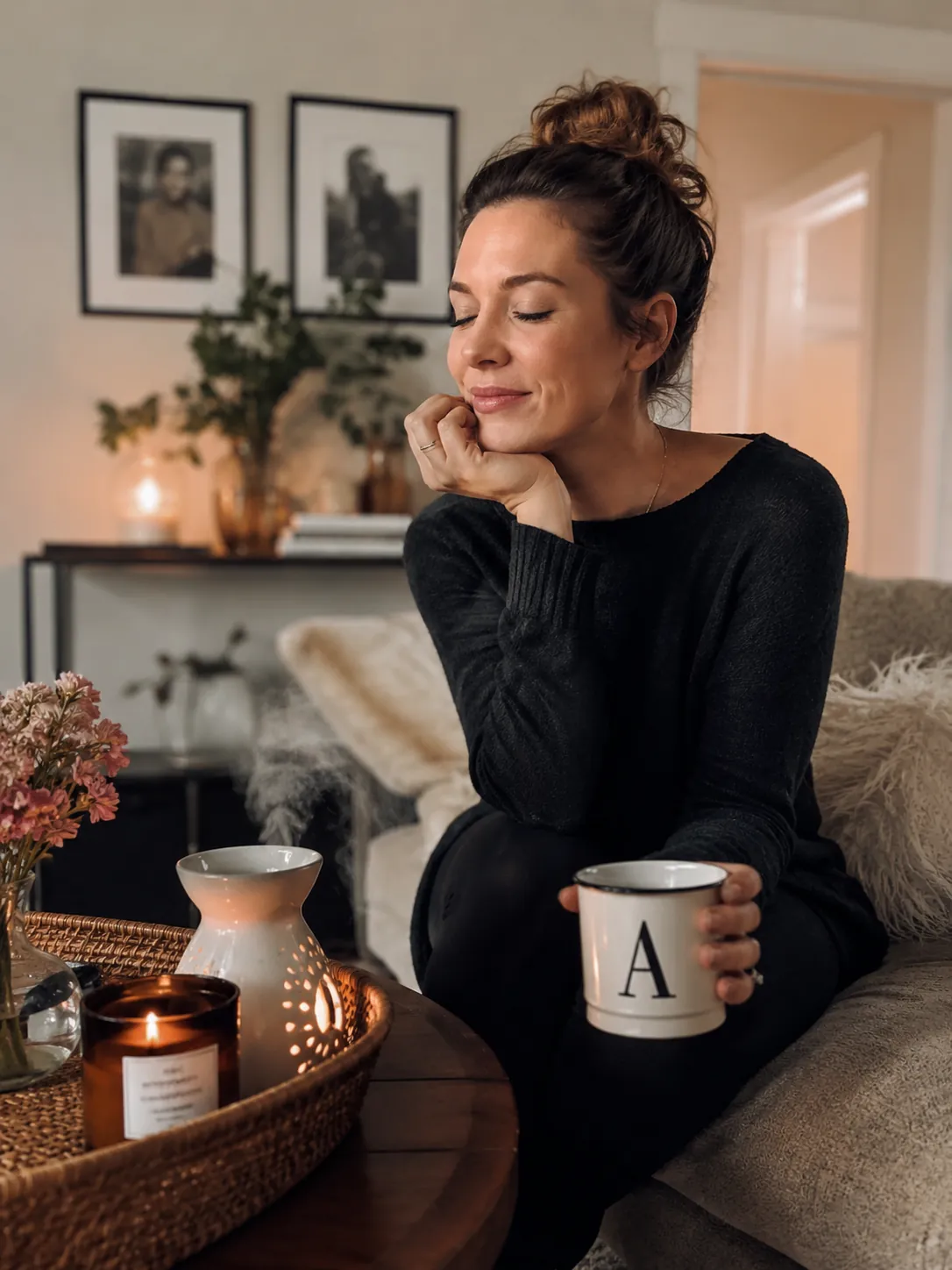
There is a second, underrated mechanism: behaviour. A warm evening ritual — diffuser on, screens off, something hot in a mug — is scaffolding. It gets you to bed earlier, it marks a clean end to the day, and it turns rest into something you do on purpose rather than something that happens when you collapse. In a season that erodes routine, a ritual that defends your evenings is doing real work.
Three oils worth having in autumn
Lavender — the rest workhorse. The most-studied essential oil for sleep quality and relaxation. A few drops diffused in the last hour before bed is the classic autumn evening pattern.
Sweet orange — the bright one. Gentle, affordable, and consistently rated among the most mood-lifting scents. Well suited to grey mornings, and one of the friendlier oils to have around the house.
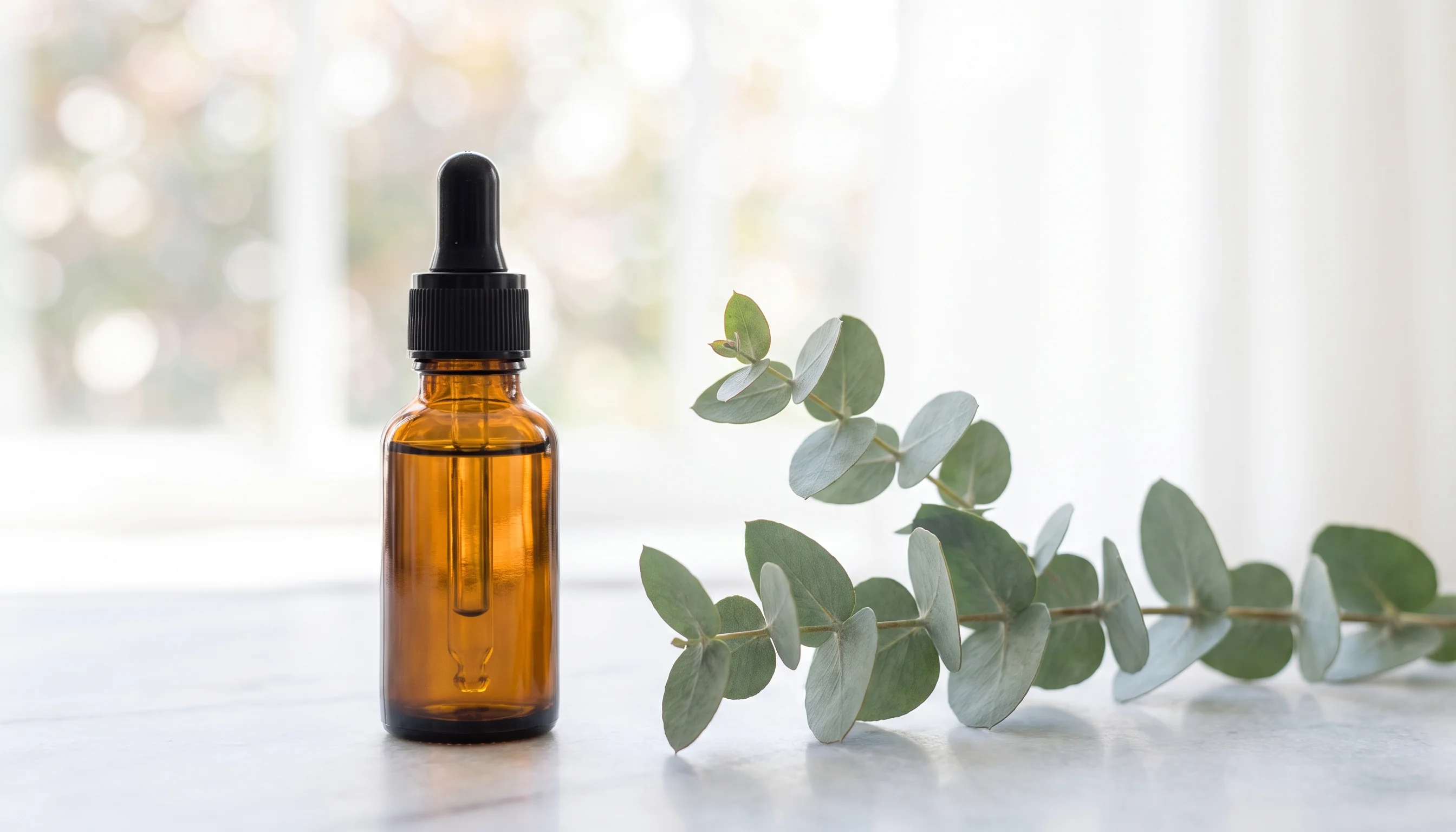
Eucalyptus radiata — the gentler breather. The softer sibling of the familiar eucalyptus. Many people find its fresh scent comforting when indoor air feels heavy — think brief, well-ventilated diffusion rather than an all-day fog.
Small children, pets, and strong oils. Oils rich in 1,8-cineole — eucalyptus and rosemary among them — are not for babies' or young children's faces or steam inhalation, and any diffusion around small children should be brief and well ventilated. Cats and dogs process essential oils very differently from us. Check the safety notes before you diffuse, and when in doubt, leave it out.
Finding a blend you can trust — not just one that smells nice
"Safe" in aromatherapy is specific and quantitative. Every oil has a dermal ceiling — a maximum skin concentration drawn from published safety data. Some oils are phototoxic in sunlight. Many carry cautions for pregnancy, children, or pets.
A trustworthy blend is one where every ingredient has been checked against all of that, which is tedious to do by hand. Our dilution calculator handles the arithmetic for a single oil, and the blend analyzer will check a whole recipe against per-oil dermal limits. In the Dilutio app, every blend carries the same safety review built in: per-oil dilution limits, audience flags, and plain-language cautions drawn from the same vetted data.
If you would rather not start from scratch, you don't have to. Tell the app what you're after — calmer evenings, easier mornings — and it assembles a recipe with the safety review attached.
Making it a rhythm, not a resolution
The difference between a blend you tried once and a ritual that carries you to December is scheduling. Pick an evening wind-down, attach your blend, set the days and the time, and let the reminder do the remembering. A brief check-in afterwards builds a week-by-week picture of what is actually helping — which beats guessing in January.
Autumn asks for rhythm, not heroics. Keep your nose warm outside and the air humidified inside; keep the bedroom dark and the evenings defended, with a scent that tells your body — reliably, at the same hour — that the day is over.
And be clear-eyed about the boundary: aromatherapy supports comfort and rest. It does not treat illness. If you are properly unwell, rest properly and see a clinician. No blend replaces that.
For education only — not medical or veterinary advice. Essential oils are not intended to diagnose, treat, cure, or prevent any condition. Always patch-test and consult a qualified professional before use during pregnancy, on children, with pets, or with a health condition.