Eucalyptus Oil, Honestly: The Fresh One — Which Species, and the Rule for Kids
A clear-eyed guide to eucalyptus — why globulus, radiata and smithii aren't interchangeable, what that 'clearing' feeling really is, and the one firm safety line around young children.
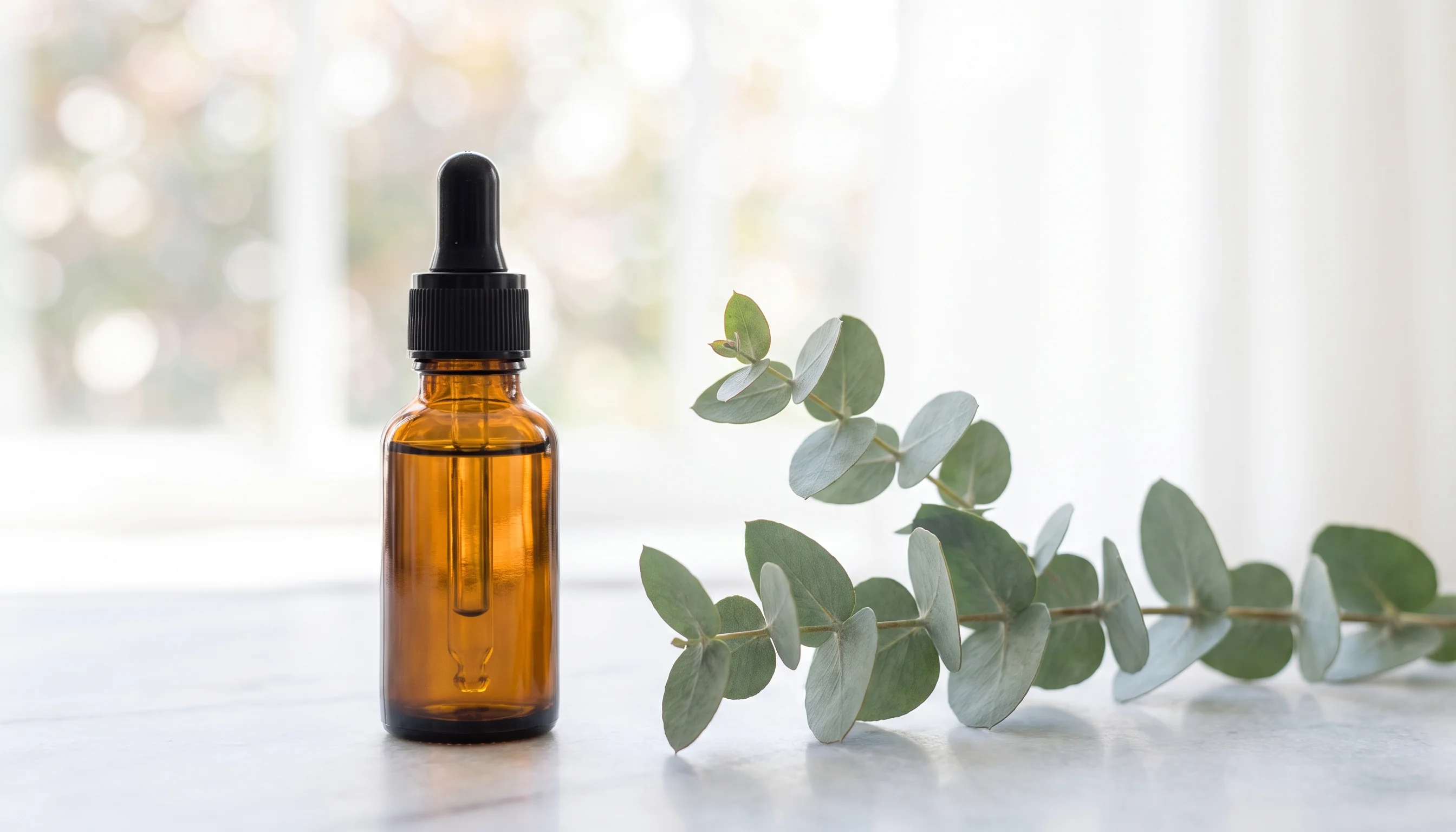
Eucalyptus is the smell of feeling better. It's in the shower steamer, the chest rub, the sauna, the "breathe" blend — a big, sharp, clearing scent people reach for the moment the weather turns. That instinct isn't wrong, but eucalyptus hides two things behind its familiar aroma: the bottle labelled "eucalyptus" could be one of several quite different oils, and it carries one genuinely firm safety rule that a lot of families break by accident.
This is the next entry in our "honestly" series. Like the lavender and peppermint guides, it separates what eucalyptus can do from what it can't — and it pairs naturally with our eucalyptus (globulus) vs peppermint and radiata vs peppermint comparisons.
"Eucalyptus" is not one oil
The first honest thing to say is that the word on the label is doing a lot of work. There are hundreds of eucalyptus species, and several are distilled for oil with meaningfully different characters:
- Eucalyptus globulus (blue gum) — the classic, forceful "eucalyptus" scent most people picture. High in its signature compound, sharp and camphoraceous.
- Eucalyptus radiata (narrow-leaved peppermint gum) — softer, rounder, and widely preferred when a gentler eucalyptus is wanted.
- Eucalyptus smithii (gully gum) — often described as the gentlest of the common three, and the one frequently suggested where the mildest option is preferred.
They are not interchangeable. If a blend or a bottle just says "eucalyptus," it's usually globulus — the strongest of the group. When you want something softer, the species name matters, and it's worth choosing on purpose. You can compare their individual profiles on their oil pages, starting with Eucalyptus (Radiata).
💡 Read past the word "eucalyptus" — globulus is the strong default; radiata and smithii are the softer choices. The Latin species name on the label is the useful information, not the marketing name.
How the oil is made — and what gives it that punch
Eucalyptus oil is produced by steam distillation of the leaves: steam passes through the foliage, the heat frees the aromatic compounds, and they condense back to a liquid that separates from the water.
The character comes overwhelmingly from 1,8-cineole (also called eucalyptol) — the crisp, penetrating note your nose reads as "clearing." All three of the common eucalyptus oils are cineole-rich; the exact amount varies by species and by batch, so don't assume one is "gentle" from its name alone — the reliable information is the oil's actual profile, not the marketing. Keep that compound name in mind, because it's the thread that connects eucalyptus's fresh reputation and its most important caution.
What that "clearing" feeling actually is
Here's where honesty matters. Eucalyptus feels like it opens up your breathing, and it has a long traditional association with steam inhalations, chest rubs and "breathe easy" blends. It's genuinely popular for a fresh, clearing atmosphere — a shower steamer, or a few drops in a diffuser on a stuffy day.
But "feels clearing" is a sensory experience, not proof the oil is treating a condition. The cool, open sensation of a cineole-rich vapour is your nerves responding to the aroma — much like peppermint's menthol trick — not evidence that eucalyptus cures a cold or replaces medicine. Enjoy it for what it reliably is: a fresh, uplifting scent that makes a room feel less stuffy. If someone is genuinely unwell, that's a conversation with a pharmacist or doctor, not a diffuser.
💡 A fresh feeling, framed honestly — Eucalyptus is a lovely clearing aroma. That's a real, repeatable experience. It is not a treatment for colds, congestion or any condition — don't let a nice smell stand in for medical care.
The safety story — read this part twice
Eucalyptus is not a gentle oil, and one of its rules is a hard line rather than a soft caution.
Never on or near the faces of babies and young children. This is the big one, and it's the rule most often broken with good intentions. Oils rich in 1,8-cineole (and menthol) should not be applied to or near the face or nose of infants and young children — near a small child's airway they can cause serious breathing trouble. Tisserand & Young's Essential Oil Safety is blunt about it, and the guidance is widely echoed. Treat it as a firm line: no eucalyptus (or peppermint) rubs, dabs or strong diffusing near little faces. (Tisserand Institute — kids and inhalation safety) If you want a fresher room with young children around, choose a gentler oil and diffuse lightly, intermittently, in a well-ventilated space — or skip it.
Caution with a history of seizures. Eucalyptus and other 1,8-cineole–rich oils act on the nervous system, and seizures have been reported in children exposed to eucalyptus oil — usually after it was swallowed, but not only then. If you or a child has epilepsy or any seizure history, check with a doctor before using or diffusing it.
Careful with asthma and reactive airways. The risk isn't only for the very young. Concentrated cineole vapour and strong fragrance can trigger coughing, wheezing or airway irritation in susceptible people rather than soothe it. If you or anyone in the room has a respiratory condition, be cautious diffusing eucalyptus around them, stop straight away if any symptoms appear, and never treat it as a substitute for asthma medication.
Risky for cats and dogs. Eucalyptus is listed among the plants and oils toxic to cats, dogs and horses, and cats in particular struggle to process these compounds safely. Keep eucalyptus away from pets, and don't apply or diffuse it around them without veterinary guidance. (ASPCA Animal Poison Control; VCA Animal Hospitals — essential-oil poisoning in cats)
Never swallow it — and if someone does, treat it as an emergency. Eucalyptus oil is toxic if swallowed; it is for external, diluted use only, kept well out of children's reach. If it is ever swallowed, contact your local poison control centre or emergency services immediately — don't wait for symptoms, as even small amounts can act fast, especially in children. For the skin, there's no single low dermal cap the way there is for phototoxic or "hot" oils — but that is not a reason to use it strong. The right strength depends on where it goes, how often, and who's using it; as a conservative rule of thumb for adult, intact skin, keep everyday blends gentle (around 1–3%, and lower on the face), patch-test first, and stay clear of the eyes. That range is not a guide for children. A dilution calculator takes the guesswork out, and the full profile is on the oil page.
Pregnancy and nursing — get advice. As with any concentrated oil, don't use eucalyptus in pregnancy or breastfeeding without guidance from a qualified professional.
The short version
- "Eucalyptus" isn't one oil: globulus is the strong classic, radiata and smithii are gentler — choose the species on purpose.
- Its character (and its cautions) come from 1,8-cineole. That crisp "clearing" note is a fresh aroma, not a proven treatment for colds or congestion. All three common species are cineole-rich, so don't judge "gentleness" by the name — check the actual profile.
- The firm rule: keep eucalyptus off and away from the faces of babies and young children — cineole-rich oils near a small airway can cause serious breathing trouble.
- Be cautious with asthma or reactive airways, and with any seizure history; keep it away from cats and dogs; never swallow it — and treat any ingestion as an emergency.
- No single low dermal limit, but keep everyday skin blends gentle (about 1–3%), patch-test, and clear of the eyes.
Safety note: This article is for general interest and is not medical or veterinary advice. Essential oils are concentrated — dilute before skin use, never ingest them, keep cineole- and menthol-rich oils away from the faces of infants and young children and from anyone with a respiratory condition, keep them away from pets (especially cats), and consult a qualified clinician or vet for any medical concern. Further reading: Tisserand Institute safety guidelines.
For education only — not medical or veterinary advice. Essential oils are not intended to diagnose, treat, cure, or prevent any condition. Always patch-test and consult a qualified professional before use during pregnancy, on children, with pets, or with a health condition.