Essential Oils in Everyday Life
Practical, non-medical ways to use essential oils at home — natural cleaning, fresher air, calmer evening routines, and travel.
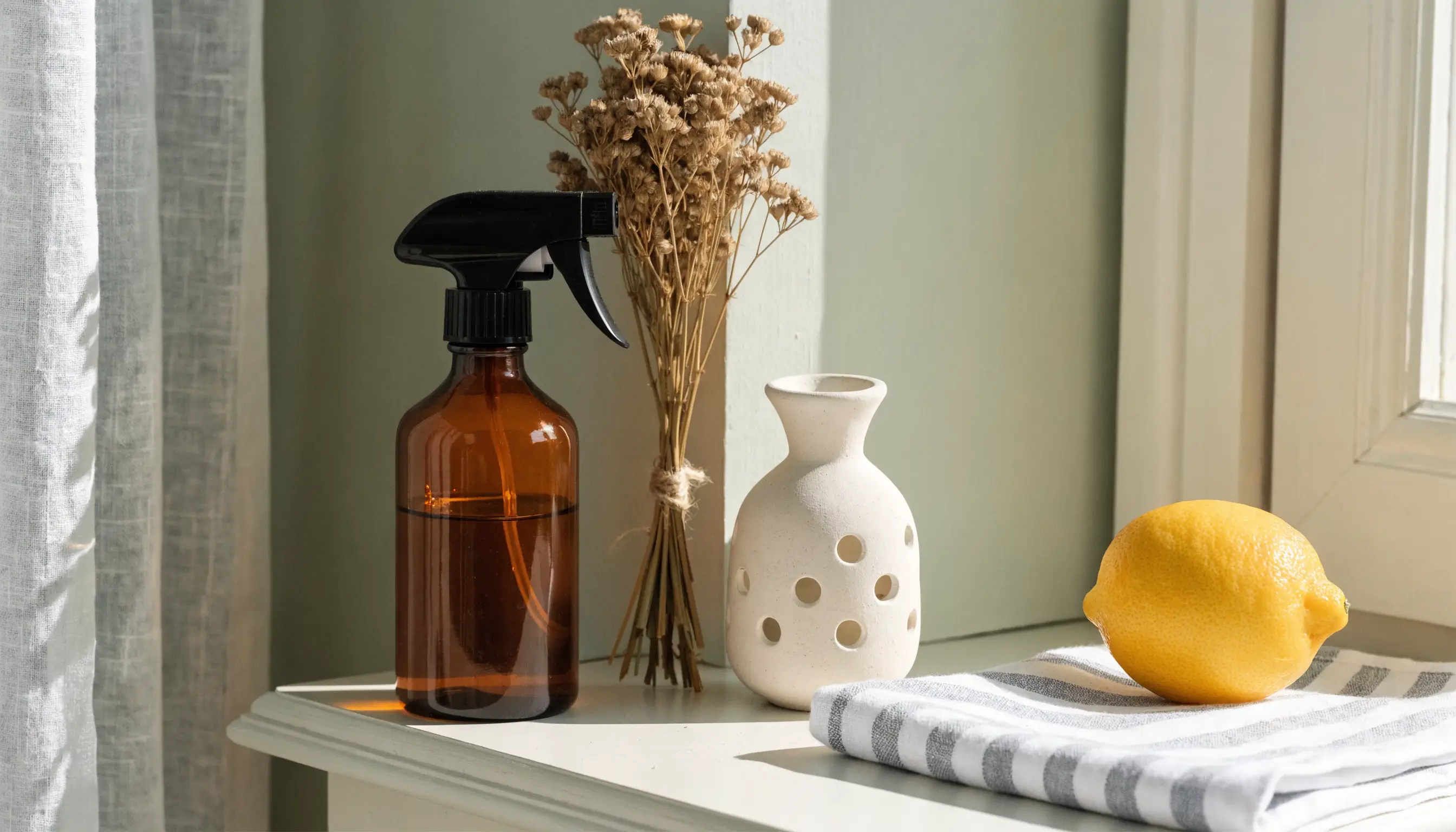
Essential oils aren't just for meditation cushions and spa days. Some of their most popular applications are pleasantly practical: complementing your cleaning routine, adding a fresh scent to indoor spaces, anchoring evening relaxation rituals, and helping you feel calm and settled while traveling. These everyday uses are where essential oils earn a place in many people's homes and routines.
This guide covers four practical, scent-focused applications of essential oils in daily life, with specific recipes, methods, and safety notes you can start using right away. A quick word before we begin: essential oils are concentrated plant extracts, not gentle. Always dilute before skin contact, patch test a new oil on your inner forearm, and keep them away from children, pets, and anyone pregnant unless a qualified professional has advised otherwise. This article is for general information and is not medical or veterinary advice.
Natural Cleaning with Essential Oils
Many conventional cleaning products contain synthetic fragrances and volatile organic compounds that some people find irritating to the airways and sensitive skin. One large 2018 study in the American Journal of Respiratory and Critical Care Medicine reported that women who regularly used cleaning sprays over roughly two decades showed a greater decline in lung function than those who did not — an observational association, not proof that cleaning products cause the decline, and the authors framed the size of the effect only as comparable in scale to some smoking-related declines. For people who prefer a different-smelling approach, essential oils can make homemade cleaners more pleasant to use.
A note before you start: oils like tea tree, eucalyptus, peppermint, and citrus can be harmful to cats and birds even in small amounts, and residues left on surfaces matter for pets that groom or walk on them. Wipe surfaces down after cleaning, keep pets out of the room while you work, and skip these recipes entirely in homes with cats or birds if you're unsure. This is not veterinary advice — check with your vet.
Bathroom Scrub: Mix half a cup of baking soda, ten drops tea tree, five drops eucalyptus, and enough liquid castile soap to form a paste. Scrub onto tiles, tubs, and sinks, then rinse clean. Because it's a thick paste rather than a spray or a bucket of water, the oils stay put and rinse away, and there's no misting into the air you breathe.
Laundry Freshener: Add five drops of lavender to wool dryer balls and toss them in with your load. The scent is subtle and the oil never touches your skin directly.
A note on what we've left out: essential oils do not dissolve or disperse in water — they float as undiluted droplets. That means water-and-vinegar all-purpose sprays, mop-bucket blends, and linen-water mists don't actually distribute the oil evenly, and they can deposit concentrated droplets onto surfaces, skin, or fabric. For reliable, even cleaning we'd rather point you to a plain vinegar or castile-soap cleaner and treat the oil as an optional scent in a paste or on dryer balls. Essential oils are also not a substitute for an EPA-registered disinfectant — a pleasant scent is not the same as killing germs, so if you need to disinfect, use a registered product.
Fresher-Smelling Air (and What Actually Cleans It)
The average American spends about ninety percent of their time indoors, where air can be two to five times more polluted than outdoor air, according to the EPA. The things that genuinely improve indoor air quality are ventilation (open a window, run an extractor fan), source control (fewer pollutants to begin with), and filtration (a good HVAC filter or a HEPA air purifier).
Diffusing essential oils is not air purification and does not remove pollutants — it adds a scent you may enjoy on top of those measures. Think of it as making a well-ventilated room smell nice, not as cleaning the air. With that framing, here are a few diffuser blends people like:
Fresh & Bright: 3 drops tea tree + 2 drops lemon + 2 drops eucalyptus.
Kitchen Reset: 3 drops lemongrass + 2 drops peppermint + 2 drops grapefruit. A pleasant way to cover cooking and pet odors while you air the room out.
Office-Friendly: 2 drops lemon + 2 drops lavender + 1 drop peppermint. Subtle enough for shared workspaces.
A few ground rules for any diffusing:
- Keep pets, birds, and young children out of it. Tea tree, eucalyptus, peppermint, and citrus can be harmful to cats and birds, and diffused peppermint and eucalyptus are best kept away from infants and young children. Diffuse only in well-ventilated rooms they can leave freely, and stop if any animal or person seems unsettled. Not veterinary advice — ask your vet.
- Diffuse intermittently and ventilate. A common practice suggestion is roughly thirty minutes on, then off — this is a comfort/habit guideline, not a dose. Run the diffuser in short bursts in an aired room rather than continuously.
- Stop if anyone reacts. Headache, coughing, or watering eyes are signs to switch it off and open a window.
- Clean the diffuser per the manufacturer's instructions to keep it working well.
Evening Relaxation Rituals
The transition from a busy day to restful sleep doesn't happen automatically, and many people find a consistent scent cue a pleasant part of winding down. Begin sixty to ninety minutes before bed. Start your diffuser with three drops lavender, two drops cedarwood, and one drop bergamot (see the pet, child, and ventilation notes above). Dim the lights and put away screens.
A 2020 review of lavender research found that lavender aromatherapy was associated with modest improvements in reported anxiety and sleep quality across a number of small studies — encouraging, but the individual trials were small and varied in quality, so treat this as "many people find it calming," not a guaranteed effect.
For a bedtime body oil, blend four drops lavender and two drops Roman chamomile into two tablespoons of jojoba (a finished dilution of roughly 1%, comfortably within a common adult range) and massage gently into the shoulders and neck. Patch test first, and skip it in pregnancy or on children unless a qualified professional has advised it. A patch test can catch an immediate reaction, but it doesn't guarantee you won't become sensitized to an oil later, so pay attention over time. Close with a few minutes of slow breathing.
The value of a ritual is its consistency. Over time, your brain can come to associate a specific scent sequence with winding down.
(We've intentionally left out the Epsom-salt bath some versions of this ritual include: essential oils don't disperse in bathwater — and salt doesn't change that — so they float as concentrated droplets that can settle on and irritate skin. If you love a bath, keep the oils out of it and enjoy them from the diffuser instead. See the Tisserand Institute on dispersing essential oils.)
Essential Oils for Travel
A compact kit of five oils covers most travel preferences: lavender for calm and restful sleep, peppermint as a refreshing pick-me-up, eucalyptus as a pleasant, familiar scent in dry cabin air, tea tree for wiping down surfaces, and sweet orange for a bright, cheerful scent. Pre-diluted roller bottles and personal inhaler sticks are the most practical formats — leak-proof, TSA-friendly, and ready to use. Eucalyptus here is simply a scent you may enjoy; it doesn't add moisture to the air or treat anything.
To ease into a new time zone, try brighter oils (peppermint, rosemary) during daytime at your destination and calming oils (lavender, cedarwood) in the evening as part of your wind-down routine.
When travel feels stressful, a pre-diluted roller of lavender and frankincense on the wrists before boarding is a popular way to encourage a sense of calm. One important caution if you want to add bergamot: cold-pressed (expressed) bergamot is strongly phototoxic, and its leave-on limit is very low — roughly 0.4% for expressed bergamot per IFRA guidance. A standard wrist roller is far above that, so only use a bergamot-free blend on exposed skin, or choose a bergapten-free (FCF) bergamot and still keep the area out of direct sun. If in doubt, leave bergamot out of any leave-on roller.
To make an impersonal hotel room feel more like yours, run a travel diffuser (again: ventilated, and away from any pets, birds, or children sharing the room) with a couple of drops of sweet orange and lavender, or simply keep a personal inhaler stick to hand.
Safety note: This article is for general information only and is not medical or veterinary advice. Essential oils are concentrated — always dilute for skin, patch test new oils, keep them away from children, pets, and birds, and avoid them in pregnancy unless a qualified professional has advised otherwise. They are not disinfectants, air purifiers, or treatments for any condition. If you have a health concern, consult a qualified healthcare or veterinary professional.
References
- EPA — Indoor Air Quality
- EPA — Selected EPA-Registered Disinfectants
- Cleaning sprays and lung-function decline (2018, Am. J. Respir. Crit. Care Med.)
- Lavender aromatherapy review (2020)
- Tisserand Institute — Dispersing Essential Oils (bath safety)
- Tisserand Institute — Phototoxicity, Essential Oils, Sun and Safety
- Tisserand Institute — Cats and Essential Oil Safety
- ASPCA — The Essentials on Essential Oils Around Pets
For education only — not medical or veterinary advice. Essential oils are not intended to diagnose, treat, cure, or prevent any condition. Always patch-test and consult a qualified professional before use during pregnancy, on children, with pets, or with a health condition.