The Complete Foundation of Essential Oils & Aromatherapy
A beginner's foundation in essential oils and aromatherapy — where they come from, how they're extracted, the science behind them, and how to judge quality.
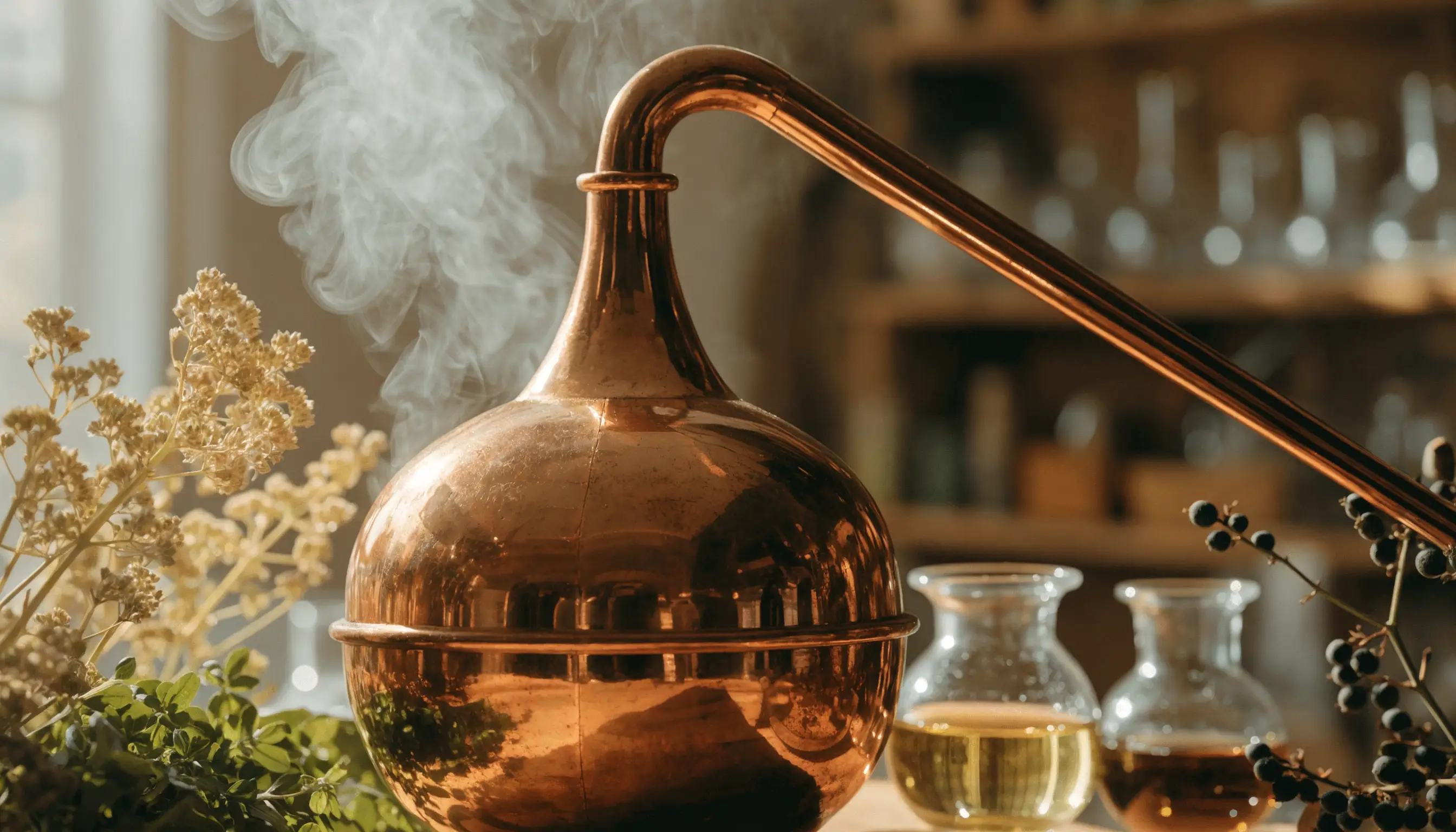
Essential oils have grown from a niche wellness curiosity into a global phenomenon, appearing in spas and yoga studios, in skincare and household products, and in both traditional practice and modern research. Yet despite this growth, many users lack the foundational knowledge that separates safe, informed practice from guesswork and misinformation.
This guide covers what a curious beginner or developing enthusiast needs to know: what essential oils actually are, how they're extracted from plants, what the science does and doesn't say about their effects, how to judge quality, and the safety principles that should guide every interaction with these concentrated plant extracts.
This article is educational and is not medical or veterinary advice. For any health concern, consult a qualified professional.
What Makes an Oil "Essential"?
The word "essential" doesn't mean necessary or indispensable. It derives from the Latin essentia, meaning the fundamental nature or essence of something. An essential oil captures the aromatic essence of a plant. Rather than a single substance, an essential oil is a complex, volatile mixture — often dozens to hundreds of different aromatic molecules — that plants produce for their own purposes, such as attracting pollinators and deterring pests.
What stands out about essential oils is how concentrated they are. As rough, highly variable illustrations of that concentration: a single drop of peppermint oil is sometimes compared to the aromatic material in many cups of peppermint tea, and it can take on the order of a few hundred pounds of lavender flowers, or thousands of pounds of rose petals, to yield a single pound of oil. Exact ratios differ widely by species, plant part, harvest, and method, so treat any such figure as illustrative rather than exact. Either way, this concentration is the source of both an oil's potency and the absolute necessity of proper dilution.
How Essential Oils Are Made
Steam distillation is the oldest and most widely used extraction method, responsible for the majority of essential oils on the market including lavender, eucalyptus, tea tree, rosemary, and peppermint. Plant material is loaded into a still, and steam passes through it, carrying the volatile aromatic compounds with it. The vapor travels through a condenser where it cools back into liquid. Because oil and water don't mix, the essential oil separates from the water — most oils are lighter and rise to the top, but some (such as clove or cinnamon bark) are denser than water and sink; the phases separate by density either way. The remaining aromatic water, called a hydrosol or floral water, is a gentle byproduct used in skincare and light aromatherapy.
Cold pressing (expression) is the standard for many citrus oils like lemon, orange, grapefruit, and bergamot. The fruit rinds are mechanically punctured and pressed to release the oil stored in tiny sacs just beneath the surface. No heat is involved, which preserves the oil's bright character. Importantly, not every cold-pressed citrus behaves the same way. Expressed bergamot, lime, and bitter orange are strongly phototoxic because they carry furanocoumarins that react with UV light; grapefruit is much milder; and steam-distilled or "FCF" (furanocoumarin-free) versions of these oils differ again. Phototoxicity depends on both the specific oil and its finished concentration on the skin, not simply on a waiting time — see the Tisserand Institute on phototoxicity, and more on that below.
Solvent extraction is reserved for delicate flowers like jasmine and tuberose that would be damaged by steam's heat. A solvent dissolves the aromatic compounds, producing first a "concrete" and then, after further processing with alcohol, an "absolute" (vanilla, for example, is typically an absolute or a CO2 extract rather than a steam-distilled essential oil). CO2 extraction uses pressurized carbon dioxide to pull aromatics from plant material. A CO2 extract is a different kind of extract — depending on the settings it can carry heavier, less-volatile constituents than the steam-distilled oil of the same plant — so it is not simply a "purer essential oil," just a different profile. The specialized equipment also makes these extracts more expensive.
The Science of Scent and the Brain
When you inhale an essential oil, volatile molecules travel through the nasal cavity and bind to olfactory receptors. Humans have a large and diverse family of these receptor types, and combinations of them let us distinguish a very large number of odors (the once-common "10,000 scents" figure is an old simplification). Smell then follows a distinctive route: olfactory sensory neurons pass signals to the olfactory bulb, which connects directly to areas of the limbic system such as the amygdala and hippocampus. Unlike vision or hearing, this pathway reaches those emotion- and memory-related regions without first routing through the thalamus. Smell doesn't "bypass all processing," but this comparatively direct anatomy is often cited as one reason a particular aroma can quickly evoke a strong emotional response or a vivid memory.
The limbic system includes the amygdala, involved in emotional reactions, and the hippocampus, involved in memory, and it communicates with the hypothalamus, which helps regulate hormones, body temperature, appetite, and the sleep-wake cycle. This anatomy is part of why researchers study whether aromas may be associated with mood and with measurable readouts like heart rate or sleep quality. These are areas of ongoing study, not settled proof that a given oil produces a given clinical effect.
Beyond inhalation, essential oil compounds can be absorbed through the skin during topical application. Some studies have detected essential oil constituents in the bloodstream a short time after topical use, showing that these molecules can enter the body rather than simply sitting on the surface. It's worth being clear about what this does and doesn't mean: detecting a compound in blood establishes that absorption occurs — it does not, by itself, establish that the oil is beneficial or that a given dose is safe.
Carrier Oils and the Rule of Dilution
Essential oils should be diluted in a carrier oil before topical application. Carrier oils — vegetable oils like jojoba, sweet almond, fractionated coconut, and argan — reduce essential oil concentration to a gentler level. A 2% dilution is a common adult starting point (roughly 12 drops per 30 ml / 1 oz of carrier), not a universal standard — each individual oil has its own maximum that overrides it, and some oils' safe maxima are far below 2%. For facial application, many people use 1% or less. See the Tisserand Institute's safety guidelines for oil-by-oil dermal limits.
A few oils are worth singling out because their safe dermal maxima sit well below a typical roller blend: cinnamon bark (around 0.07%) and clove bud (around 0.5%) are examples, which is why they don't belong in a leave-on roller at 2%. Expressed bergamot's leave-on limit is very low (IFRA lists roughly 0.4% for the expressed oil), so it should never go into a leave-on wrist or temple roller unless it's the furanocoumarin-free (FCF) version, and sun caution still applies.
Applying undiluted essential oils to the skin risks immediate irritation and, over time, sensitization — an immune response that can develop after repeated exposure and is often long-lasting. Once sensitized to an oil, even trace amounts can trigger a reaction. This risk exists even with oils considered "gentle," like lavender and tea tree, particularly when used undiluted over extended periods.
Children, infants, and dilution
Children need more caution, not just smaller numbers. Under age 2, topical essential oils are best avoided unless a qualified professional advises otherwise. For older children, use very low dilutions and choose gentle, age-appropriate oils. Some oils should be kept away from young children's faces entirely — peppermint and eucalyptus (and other high-menthol or 1,8-cineole oils) are contraindicated near the face of infants and young children because of the risk of breathing problems. When in doubt for a child, ask a qualified professional first. This is not medical advice.
A Note on Recipes and Water
You'll see many online "recipes" that add essential oil drops to bathwater, water sprays, or warm compresses, sometimes with Epsom salt, vinegar, or witch hazel described as a way to "mix them in." Essential oils do not dissolve or disperse in water, and salt, vinegar, and witch hazel are not dispersants — drops float as concentrated films that can contact skin at full strength. For that reason Dilutio doesn't publish bath, water-spray, or compress recipes. If you want to explore dilution science further, the Tisserand Institute's note on dispersing essential oils explains why. Open-bowl steam inhalation is also best avoided: it carries a real scald risk, and health bodies including the British Burn Association advise caution with hot-water steam.
A well-ventilated diffuser is a safer way to enjoy an aroma. Use it intermittently rather than continuously, ventilate the room, and stop if anyone feels irritation. Keep diffusion away from pets, birds, and young children: cats in particular have reduced (not absent) ability to process certain compounds — a quirk of their liver metabolism — so oils like tea tree, eucalyptus, peppermint, and citrus can be harmful to them, and to birds, depending on the specific chemistry, dose, and route. The ASPCA and the Tisserand Institute both have practical guidance. This is not veterinary advice; check with a vet about your specific animals.
Reading Labels and Identifying Quality
The essential oil market includes adulterated products, and knowing how to read a label is your primary defense. A quality oil should list the plant's Latin botanical name, the country of origin, the extraction method, the plant part used, and a batch number. Terms like "therapeutic grade" and "certified pure" are marketing language with no government or regulatory definition — no official body defines or certifies "therapeutic grade," so it tells you nothing on its own.
A useful tool for verifying composition is a gas chromatography–mass spectrometry (GC-MS) report, which maps an oil's chemical profile and can help reveal synthetic additives or cheaper substitute oils. GC-MS is important but not a lone "gold standard": interpreting it well requires authentic reference standards, and detecting some sophisticated adulteration can also call for chiral or isotope-ratio testing. Reputable companies make batch reports available; if a brand won't share any testing data, treat that as a red flag.
Independent testing has repeatedly found adulteration to be common at the cheaper end of the market, frequently involving synthetic constituents or cheaper look-alike oils. Treat unusually low prices with suspicion, and favor brands that publish batch-level testing you can actually read.
A Longer History Than You Might Think
Aromatic and botanical practice has a long history across many cultures — early distillation was refined by scholars such as Avicenna (who advanced the technique rather than inventing modern essential-oil isolation). In the 19th century, the English perfumer and chemist G. W. Septimus Piesse helped popularize a structured way of thinking about fragrance; you can read more about his work in the Wellcome Collection. The term "aromatherapy" is associated with the French chemist René-Maurice Gattefossé, whose story is documented by the Gattefossé Foundation. The through-line is that people have valued plant aromatics for a very long time — well before the modern chemistry that now lets us analyze them.
Sustainability
Concentration means a lot of plant material per bottle, so sourcing matters. Conservation status varies by species: sandalwood (Santalum album) is classed as Vulnerable, and rosewood (Aniba rosodora) is Endangered — see Kew's Plants of the World Online. It's a mistake to assume any one substitute is "automatically ethical": Atlas cedarwood (Cedrus atlantica), sometimes suggested as a swap, is itself Endangered. The most reliable signal isn't a species name but supplier traceability — knowing where and how an oil was grown, harvested, and distilled.
Safety note: This article is educational and is not medical or veterinary advice. Essential oils are concentrated and can cause harm if misused. Always dilute for skin, respect each oil's own maximum, keep oils away from pets, birds, and young children, patch test before broader use (a patch test can flag an immediate reaction but does not guarantee against later sensitization), and consult a qualified professional for any health or veterinary concern.
References
- Tisserand Institute — Safety Guidelines
- Tisserand Institute — Phototoxicity, Essential Oils and the Sun
- Tisserand Institute — Dispersing Essential Oils
- Tisserand Institute — Cats and Essential Oil Safety
- ASPCA — Essential Oils Around Pets
- British Burn Association — Patient Advice
- Wellcome Collection — G. W. Septimus Piesse
- Gattefossé Foundation — René-Maurice Gattefossé
- Kew — Plants of the World Online (Aniba rosodora / rosewood)
For education only — not medical or veterinary advice. Essential oils are not intended to diagnose, treat, cure, or prevent any condition. Always patch-test and consult a qualified professional before use during pregnancy, on children, with pets, or with a health condition.